José Mourinho: The Brilliant and Controversial Manager Who Changed Football Forever 00

Introduction
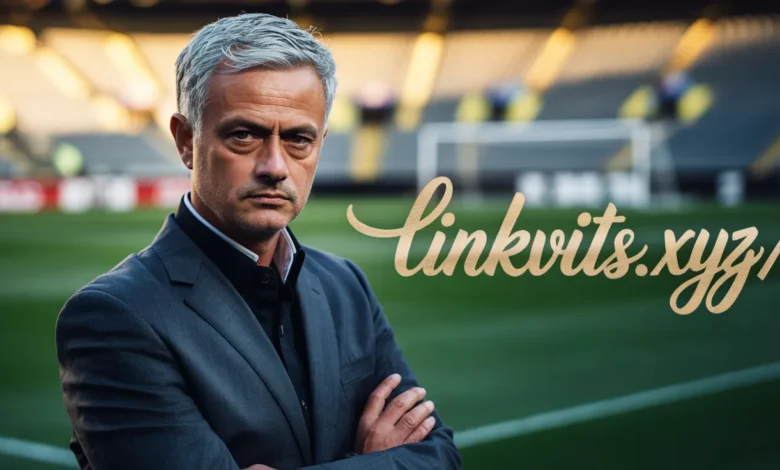
If you follow football even casually, you already know the name José Mourinho. He is loud. He is magnetic. He wins trophies. He also burns bridges. And somehow, every single club he walks into becomes must-watch television.
José Mourinho is not just a football manager. He is a phenomenon. Since bursting onto the global stage with Porto in 2004, he has managed some of the world’s biggest clubs — Chelsea, Inter Milan, Real Madrid, Manchester United, Tottenham, Roma, and Fenerbahçe. He has won league titles in four different countries. He has lifted the UEFA Champions League twice.
But his story is not just about silverware. It is about personality, psychology, tactics, and the unique brand of football that only he delivers.
In this article, you will get the full picture. We cover his early life, his tactical genius, his most memorable moments, his biggest feuds, and his lasting impact on modern football. Whether you love him or can’t stand him, you cannot ignore him.
Who Is José Mourinho? A Quick Background
José Mário dos Santos Mourinho Félix was born on January 26, 1963, in Setúbal, Portugal. His father, Félix Mourinho, was a professional goalkeeper who played for the Portuguese national team. Football was in his blood from day one.
His playing career was modest. He never made it as a top professional player. Instead, he went into coaching — and that decision changed football history.
He started as a translator and assistant coach for Bobby Robson at Sporting CP, Porto, and then Barcelona. Those years were his real education. He watched, learned, and built a football brain that would eventually outsmart some of the greatest managers in the game.
The Rise of “The Special One”
Porto: Where the Legend Was Born
In 2002, Mourinho became head coach of FC Porto. Within two years, he made them European champions.
Porto won the UEFA Cup in 2003. Then, shockingly, they won the UEFA Champions League in 2004 — beating clubs with far bigger budgets and bigger names. That Porto team played with incredible intensity, defensive organization, and tactical discipline. It was pure Mourinho football.
After that Champions League win, he walked into a Chelsea press conference in London and said the words that defined his career:
“I am a special one.”
He did not say it arrogantly. He said it with total conviction. And he backed it up.
Chelsea: Back-to-Back Premier League Titles
At Chelsea under Roman Abramovich, Mourinho delivered immediately. He won back-to-back Premier League titles in 2005 and 2006. Chelsea set records for the fewest goals conceded. They were defensively ruthless and physically dominant.
His first Chelsea tenure showed the world what a Mourinho team looks like at its peak:
- Incredibly hard to beat
- Disciplined in every position
- Mentally stronger than the opposition
- Clinical on the counter-attack
Players like John Terry, Frank Lampard, and Didier Drogba became legends under him. They did not just perform well. They performed in the biggest moments, under the most pressure.
Mourinho’s Tactical System Explained
The Famous 4-2-3-1 Formation
Mourinho is closely associated with the 4-2-3-1 formation, though he adapts based on his players. The key principles stay the same regardless of the shape he uses.
Defensive solidity first. Mourinho builds his teams from the back. Every player understands their defensive responsibility. Even the attackers press and track back. This is non-negotiable in a Mourinho system.
Two holding midfielders. The double pivot is central to his philosophy. These two players protect the defence, win the ball back quickly, and recycle possession. Think Claude Makélélé at Chelsea or Esteban Cambiasso at Inter Milan.
Wide players who defend. His wide midfielders or wingers are not just creators. They work hard out of possession and help the full-backs deal with opposing wingers.
A number 10 with freedom. Behind the striker, Mourinho often plays a creative player with freedom to roam and find space. Frank Lampard, Wesley Sneijder, and Mesut Özil all thrived in this role under him.
One main striker. The lone striker in a Mourinho system does not need to be a constant scorer. They need to hold up play, press the opposition’s centre-backs, and be lethal when chances arrive. Drogba was the perfect example.
Counter-Pressing and Transition Play
Mourinho’s teams are dangerous on the counter-attack. They defend deep, absorb pressure, and then explode forward. Speed in transition is everything. He coaches his players to switch from defensive shape to attacking mode in seconds.
This style frustrates beautiful-football purists. But it wins games. And Mourinho is in the business of winning games.
Trophy Cabinet: The Numbers That Silence Critics
Critics call Mourinho defensive. They call him boring. But the trophy record is impossible to argue with.
| Club | Country | Honours |
|---|---|---|
| Porto | Portugal | Liga, Champions League, UEFA Cup |
| Chelsea | England | 3x Premier League, FA Cup, League Cup |
| Inter Milan | Italy | 3x Serie A, Champions League, Coppa Italia |
| Real Madrid | Spain | La Liga, Copa del Rey |
| Manchester United | England | League Cup, Europa League |
| Roma | Italy | UEFA Conference League |
That Conference League win with Roma in 2022 made Mourinho the only manager in history to win the UEFA Cup/Europa League, Champions League, and UEFA Conference League. That is a unique achievement no other manager can claim.
The Feuds and Controversies That Define Him
Mourinho vs. Arsène Wenger
This was the Premier League’s greatest managerial rivalry. Mourinho and Wenger disagreed on everything — football philosophy, training methods, spending, and culture. Their press conference battles were must-watch content for football fans.
Mourinho famously described Wenger as a “voyeur” who watches other teams while his own team underperforms. Wenger called Mourinho arrogant. The tension between them was real and entertaining throughout their overlapping years in England.
Mourinho vs. Pep Guardiola
When Mourinho was at Real Madrid and Guardiola was at Barcelona, their Clásico rivalry became the biggest managerial battle in world football. Both men were brilliant. Both were obsessed with winning. And both genuinely disliked each other.
Mourinho accused Barcelona of having corrupt influence over referees. Guardiola denied everything and let his football speak. Real Madrid won La Liga in 2012 with a record 100 points — but Barcelona dominated their head-to-head battles during that era.
The rivalry showed two completely opposing football philosophies at the highest possible level. It was genuinely extraordinary to watch.
The Rome Chapter and His Exit from Fenerbahçe
At Roma, Mourinho enjoyed a love affair with the city and the fans. They embraced him. He embraced them. That Conference League trophy was emotional for everyone involved. But Serie A results were inconsistent, and he was eventually dismissed in January 2024.
He then took over at Fenerbahçe in Turkey — a massive club with a passionate fanbase. The Turkish Super Lig gave him a new challenge. He left the club in the summer of 2025, with reports of disagreements over transfer strategy.
What Makes Mourinho Different From Other Top Managers?
Psychological Warfare
Mourinho understands that football is as much mental as physical. He uses press conferences to put pressure on opponents, distract referees, and motivate his own players. Everything he says publicly is calculated.
Before big games, he often deflects pressure from his players by putting himself front and centre. His team relaxes. The opponent’s focus shifts. This is psychological mastery.
Player Loyalty
For all the drama, players who work under Mourinho are fiercely loyal to him. John Terry. Drogba. Lampard. Sneijder. They all speak about him with enormous respect. He makes them feel special. He makes them feel like winners.
He also protects his players publicly, even when they make mistakes. That loyalty goes both ways.
Winning Mentality
You can debate his style all day. But Mourinho instils a winning mentality that few managers can match. He has won league titles in Portugal, England, Italy, and Spain. He has won major European trophies three times. Players say the confidence he gives them is unlike anything they experience anywhere else.
Mourinho’s Legacy: How He Changed Football
José Mourinho did not invent defensive football. But he perfected and popularised a specific model of high-intensity, structured, counter-attacking football that influenced an entire generation of coaches.
You can see his influence in how managers across Europe set up their teams:
- The double pivot in midfield is now standard practice
- Pressing triggers and organised defensive blocks are coached everywhere
- The use of psychology in press conferences became mainstream after him
Beyond tactics, he changed how managers behave. He showed that a manager could be the story. He made the coaching role glamorous, dramatic, and globally followed in a way it had never been before.
Common Questions Fans Ask About Mourinho
Before the FAQs section, here are a few important questions that come up constantly in football conversations.
Is Mourinho still a top manager in 2025? Yes, though his recent results have been mixed. His period at Fenerbahçe showed he can still motivate players and compete at a high level. His next move will be watched closely.
Why does Mourinho get sacked so often? He tends to have short explosive tenures. He delivers results quickly but often clashes with ownership or loses the dressing room after two or three seasons. It is a pattern.
Which club would suit Mourinho best now? Many analysts believe he would thrive at a club that gives him full authority, a strong squad, and patient ownership. A return to Portugal or a major club in need of a rescue job could suit him perfectly.
Conclusion
José Mourinho is one of the most fascinating figures in football history. He is a winner, a psychologist, a tactician, and a showman all rolled into one. His career has produced extraordinary highs — back-to-back Premier League titles, a treble at Inter Milan, a historic Conference League with Roma — and some uncomfortable lows.
What you cannot do is ignore him. Wherever Mourinho goes, drama follows. So does ambition. And so, usually, do trophies.
His story is not finished. Football has a way of bringing great managers back to the spotlight. When Mourinho returns to management at a top club — and he will — the football world will watch closely once more.
What do you think his next chapter will look like? Drop your thoughts in the comments. And if you found this article useful, share it with a fellow football fan who loves debating the game’s greatest minds.
Frequently Asked Questions (FAQs)
1. What is José Mourinho’s full name? His full name is José Mário dos Santos Mourinho Félix. He was born on January 26, 1963, in Setúbal, Portugal.
2. How many trophies has José Mourinho won? Mourinho has won over 25 major trophies across his career, including league titles in Portugal, England, Italy, and Spain, as well as multiple European trophies including two Champions League titles.
3. What clubs has José Mourinho managed? He has managed Benfica, União de Leiria, Porto, Chelsea, Inter Milan, Real Madrid, Manchester United, Tottenham Hotspur, AS Roma, and Fenerbahçe.
4. Why did Mourinho leave Roma? Roma dismissed him in January 2024 after a run of inconsistent Serie A results, despite his iconic UEFA Conference League victory with the club in 2022.
5. What is Mourinho’s coaching style? He favours a defensively organised, structured style with a strong emphasis on tactical discipline, counter-attacking football, and psychological preparation.
6. Has Mourinho ever won the Champions League? Yes, twice. First with Porto in 2004 and then with Inter Milan in 2010 as part of a historic treble.
7. What is José Mourinho doing in 2025? Mourinho departed Fenerbahçe in 2025. His next managerial role has been a topic of widespread speculation in football media.
8. Why is Mourinho called “The Special One”? He coined this phrase himself in his very first Chelsea press conference in 2004. He said he was not arrogant but simply stated facts about his success with Porto. The nickname stuck.
9. What language does Mourinho speak? Mourinho is famously multilingual. He speaks Portuguese, English, Spanish, Italian, French, and Catalan fluently, which has helped him manage across multiple countries.
10. Who are the players who performed best under Mourinho? Didier Drogba, Frank Lampard, John Terry, Wesley Sneijder, and Diego Milito are often cited as players who reached their absolute peak under Mourinho’s management.
Read More…..
Author Bio
Author: Aiden Walsh Aiden is a sports journalist and football analyst with over a decade of experience covering European football. He has written for several leading sports publications and specialises in tactical analysis, managerial profiles, and the cultural side of the game. When he is not writing about football, he is watching it — usually three matches at a time.