Introduction
You’ve probably seen the Oura Ring on someone’s finger and wondered what the hype is all about. This sleek, minimalist ring promises to track your sleep, activity, and recovery without the bulk of a smartwatch strapped to your wrist. But does it actually deliver on those promises, or is it just another expensive gadget collecting dust in your drawer?
The Oura Ring has become incredibly popular among athletes, biohackers, and anyone serious about optimizing their health. With celebrities and tech enthusiasts singing its praises, it’s natural to wonder if this tiny device can really provide meaningful insights into your body’s patterns. In this comprehensive Oura Ring review, I’ll walk you through everything you need to know about its features, accuracy, pros and cons, and whether it’s worth your hard-earned money. You’ll get a clear picture of what this smart ring can and cannot do for your health journey.
What Exactly Is the Oura Ring?
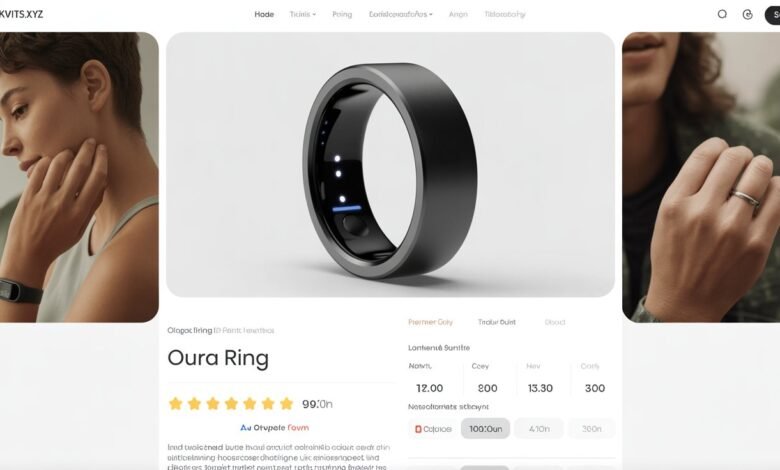
The Oura Ring is a smart ring designed to track your health metrics 24/7. Unlike fitness trackers or smartwatches, it focuses primarily on three main areas: sleep, activity, and readiness. The ring looks like a normal piece of jewelry, making it far more discreet than traditional wearables.
Inside this small device are multiple sensors. These include infrared LED sensors, a negative temperature coefficient sensor, a 3D accelerometer, and a gyroscope. Together, they monitor your heart rate, heart rate variability, body temperature, respiratory rate, and movement patterns.
The third-generation Oura Ring, which is the current model, comes in two finishes: Heritage (glossy) and Horizon (completely round with no plateau). You can choose from multiple colors including silver, black, stealth, gold, rose gold, and brushed titanium. The ring is lightweight, waterproof up to 100 meters, and remarkably durable for everyday wear.
What makes the Oura Ring different from other wearables is its emphasis on recovery and readiness. Instead of just counting steps or calories, it helps you understand when your body needs rest and when you’re ready to push hard.
How the Oura Ring Tracks Your Sleep
Sleep tracking is where the Oura Ring truly shines. Many users, myself included, consider it one of the most accurate consumer sleep trackers available. The ring monitors your sleep stages including light sleep, deep sleep, REM sleep, and time awake throughout the night.
Every morning, you receive a Sleep Score based on multiple factors. These include total sleep time, sleep efficiency, restfulness, REM and deep sleep duration, sleep latency (how long it takes you to fall asleep), and sleep timing. The score ranges from 0 to 100, giving you a quick snapshot of your sleep quality.
The ring also tracks your resting heart rate during sleep. This metric drops when you’re truly relaxed and recovered. If your resting heart rate remains elevated, it often signals stress, illness, or insufficient recovery. You’ll also see your heart rate variability (HRV), which reflects your nervous system’s balance and your body’s resilience to stress.
Body temperature monitoring is another standout feature. The Oura Ring establishes your baseline temperature over time and alerts you to deviations. This can help you detect early signs of illness, track your menstrual cycle, or identify when you’re overtraining. Many users have reported receiving temperature alerts days before feeling sick.
The respiratory rate tracking shows how many breaths you take per minute during sleep. Changes in this metric can indicate respiratory issues, stress, or other health concerns. All these data points combine to give you comprehensive sleep insights that go far beyond simply tracking hours slept.
Activity and Movement Tracking Features
While sleep is the Oura Ring’s specialty, it also tracks your daily activity. The ring monitors your steps, calories burned, and active time throughout the day. However, this isn’t where the device excels compared to dedicated fitness trackers or smartwatches.
The Activity Score evaluates whether you’re meeting your movement goals. It considers factors like total burn calories, steps, training frequency and volume, and recovery time. The ring encourages balanced activity rather than pushing you to exercise intensely every single day.
One limitation is that the Oura Ring doesn’t have GPS built in. You can’t track outdoor runs or bike rides with detailed route mapping. The ring also struggles with automatic workout detection for certain activities. While it recognizes walking and running fairly well, it may miss strength training sessions or yoga classes.
For workouts, you can manually add activities through the app. The ring will still track your heart rate during these sessions, giving you insights into intensity and recovery. However, if real-time workout tracking with detailed metrics is important to you, a smartwatch might better serve your needs.
The ring shines when it comes to understanding your overall movement patterns. It tracks inactive time and reminds you to move if you’ve been sitting too long. This gentle nudge toward consistent movement throughout the day can be more valuable than obsessing over step counts.
The Readiness Score: Your Daily Health Dashboard
The Readiness Score is perhaps the most unique feature of the Oura Ring. Each morning, you receive a score from 0 to 100 that tells you how prepared your body is for the day ahead. This score considers your sleep quality, recovery status, activity levels from previous days, and various physiological markers.
Your readiness score helps you make smarter decisions. On days when your score is high, you know your body can handle intense workouts or challenging tasks. When the score is low, it’s a signal to take things easier, focus on gentle movement, or prioritize rest.
The score factors in your resting heart rate, HRV, body temperature, respiratory rate, sleep balance, previous day’s activity, and activity balance over the past week. This holistic approach gives you a more complete picture than any single metric alone.
Many athletes use the Readiness Score to optimize their training. Instead of following a rigid workout schedule, they adjust based on what their body is telling them through the ring. This approach can prevent overtraining, reduce injury risk, and lead to better long-term performance gains.
I’ve found the Readiness Score particularly helpful for understanding how lifestyle factors affect my body. Late-night meals, alcohol consumption, stress, and poor sleep all show up clearly in the next day’s score. This immediate feedback helps reinforce healthy habits and makes consequences of choices visible.
Battery Life and Charging Experience
Battery life is one area where the Oura Ring performs admirably. You can expect four to seven days of use on a single charge, depending on usage patterns and ring size. Smaller ring sizes have slightly smaller batteries and may need charging more frequently.
The charging process is straightforward. The ring comes with a small charging dock that you place the ring on. A full charge typically takes 20 to 80 minutes. The charging dock itself needs to be plugged into a USB power source.
One minor inconvenience is that you need to remember to pack the charging dock when traveling. Unlike smartwatches that often use standard charging cables, the Oura Ring requires its specific dock. However, the dock is small and portable, so it’s not a major hassle.
The battery performance has improved with each generation. The third-generation Oura Ring maintains consistent battery life even after months of use. You won’t experience the rapid battery degradation that plagues some wearable devices.
Planning your charging routine is easy. Most users charge their ring while showering or during their morning routine. Since charging is relatively quick, you won’t miss significant data collection. The ring also provides low battery warnings through the app, so you’re never caught off guard.
Accuracy and Data Reliability
Accuracy is critical for any health tracking device. The Oura Ring has been validated in multiple studies and generally performs well compared to medical-grade equipment. However, like all consumer wearables, it’s not perfect.
Sleep stage detection with the Oura Ring shows strong correlation with polysomnography, the gold standard for sleep measurement used in sleep labs. Studies have found the ring accurately identifies sleep stages about 79% of the time for light sleep, 51% for deep sleep, and 61% for REM sleep. While not perfect, these numbers are impressive for a consumer device.
Heart rate tracking during sleep is highly accurate. The ring’s placement on your finger provides excellent blood flow measurement. However, heart rate tracking during intense exercise can be less reliable. The ring isn’t designed for real-time workout heart rate monitoring the way chest straps or some smartwatches are.
Heart rate variability measurements are where the Oura Ring excels. The finger placement and nighttime measurement period provide optimal conditions for HRV tracking. Many experts consider the Oura Ring’s HRV data among the most reliable in consumer wearables.
Temperature tracking is accurate for detecting relative changes from your baseline. However, the ring measures skin temperature, not core body temperature. This means you’ll see trends and deviations that are meaningful for tracking your health patterns, even if the absolute temperature numbers differ from what a medical thermometer would show.
Step counting and activity tracking are generally accurate for everyday movement. However, the ring may undercount steps during certain activities or when your hands aren’t swinging naturally. For precise step counting, dedicated fitness trackers with wrist placement might have a slight edge.
The Oura App Experience
The Oura app is where all your data comes together. Available for both iOS and Android, the app features a clean, intuitive interface that makes understanding your health metrics easy. You don’t need to be a data scientist to interpret your scores and insights.
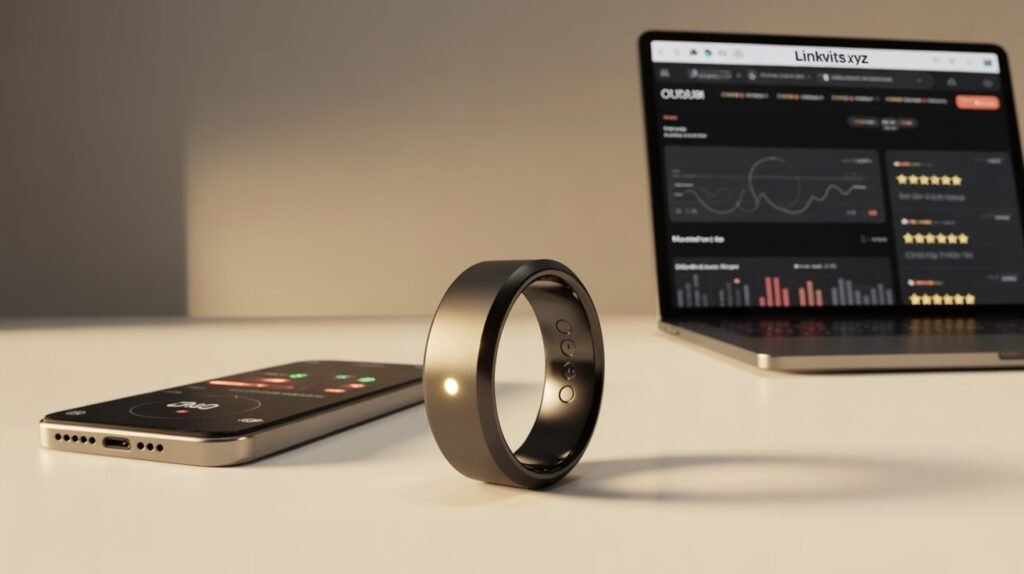
The home screen displays your three main scores: Readiness, Sleep, and Activity. You can tap into each for detailed breakdowns. The app uses helpful visualizations, graphs, and trend lines to show how your metrics change over time.
One feature I appreciate is the Tags system. You can tag your days with activities like alcohol consumption, meditation, late meals, or travel. Over time, you can see how these factors correlate with your sleep quality and readiness scores. This creates powerful insights into which habits help or hurt your recovery.
The app also includes guided audio sessions for meditation and breathing exercises. These are helpful for winding down before bed or managing stress during the day. The ring can track your heart rate during these sessions, showing you real-time effects of your practice.
Trend analysis helps you understand patterns over weeks and months. You can see how your sleep efficiency improves, how consistently you’re meeting activity goals, or how your HRV changes with the seasons. This long-term perspective is valuable for making sustainable health improvements.
The app integrates with Apple Health and Google Fit, allowing you to sync your Oura data with other health platforms. This interoperability makes the ring part of a larger health tracking ecosystem if you use multiple apps or devices.
Membership Requirements and Ongoing Costs
Here’s something important to know: the Oura Ring requires a monthly membership subscription to access all features. The ring itself costs $299 to $549 depending on the finish you choose. After that, you’ll pay $5.99 per month for the Oura Membership.
The membership includes access to personalized insights, daily health metrics, trends analysis, guided audio content, and regular feature updates. Without the membership, you’ll only see your three daily scores without detailed breakdowns or historical data.
This subscription model frustrates some users who feel they’ve already paid a premium price for the hardware. However, Oura argues the membership supports ongoing app development, research partnerships, and new feature rollouts. The company regularly adds new capabilities through software updates.
When you first purchase the ring, you receive six months of free membership. This gives you time to evaluate whether the insights justify the ongoing cost. After the trial period, you’ll need to decide if the $5.99 monthly fee provides enough value for your health goals.
Compared to other health tracking subscriptions, the Oura membership is relatively affordable. Some fitness platforms charge $15 to $40 per month. Still, the ongoing cost is something to factor into your decision, especially if you’re on a tight budget.
Comfort and Wearability in Daily Life
Comfort is crucial for a device you’ll wear 24/7. The Oura Ring is remarkably comfortable once you get used to it. Made from titanium with a non-allergenic, non-metallic inner molding, the ring is lightweight and smooth against your skin.
Getting the right size is critical. Oura provides a free sizing kit before you purchase. You’ll wear the sizing rings for at least 24 hours to ensure comfort during various activities. Your fingers can swell slightly at night or during exercise, so proper sizing accounts for these fluctuations.
Most users forget they’re wearing the ring after a few days. It’s much less obtrusive than a smartwatch or fitness band. You can type, write, cook, and go about daily activities without the ring getting in the way. The ring is also safe for handwashing and showering.
Some people find wearing a ring on their index finger (the recommended placement) takes adjustment. If you already wear rings regularly, the transition is easier. The ring should be snug but not tight, similar to how a wedding ring fits.
The ring is durable enough for most activities. You can wear it during weightlifting, yoga, swimming, and everyday tasks. However, activities that put direct pressure on your fingers, like rock climbing or heavy manual labor, might require removing the ring to prevent damage.
One consideration is aesthetics. While the Oura Ring looks sleek and modern, it’s clearly a tech device rather than traditional jewelry. Some people love the futuristic look, while others prefer more subtle wearables. The various color options help you find a style that matches your preference.
Pros and Cons of the Oura Ring
Let’s break down the strengths and weaknesses to help you make an informed decision.
Advantages
The sleep tracking accuracy stands out as best-in-class for consumer devices. You get detailed insights into sleep stages, disturbances, and quality that rival medical equipment.
The discreet form factor means you can track health metrics without the bulk of a smartwatch. Many users appreciate the subtle, jewelry-like appearance.
Battery life lasting up to a week reduces charging anxiety. You won’t need to charge daily like most smartwatches.
The holistic approach to health tracking emphasizes recovery and readiness rather than just activity. This perspective helps prevent burnout and overtraining.
The Readiness Score provides actionable guidance for daily decision-making. You’ll know when to push hard and when to prioritize rest.
Comprehensive metrics including HRV, body temperature, and respiratory rate give you deeper health insights than basic fitness trackers.
Disadvantages
The monthly membership fee adds ongoing costs after your initial hardware purchase. This subscription model isn’t appealing to everyone.
Limited real-time workout tracking means the ring isn’t ideal if you want detailed exercise metrics during activities. The lack of GPS is a significant limitation for runners and cyclists.
No screen or notifications means you can’t check data without pulling out your phone. This is by design for minimalism but limits quick reference.
Delayed data synchronization can be frustrating. The ring typically syncs data when you open the app, not continuously throughout the day.
The high upfront cost makes this a significant investment compared to basic fitness trackers. You need to be committed to using the insights.
Finger sizing challenges mean you need to be careful with the sizing kit. Ordering the wrong size requires an exchange process.
Who Should Buy the Oura Ring?
The Oura Ring isn’t for everyone. Certain types of users will benefit most from this device.
You should consider the Oura Ring if sleep optimization is your primary goal. The detailed sleep tracking and personalized insights can help you understand and improve your rest patterns. People struggling with sleep issues often find the data revealing and actionable.
Athletes and fitness enthusiasts who understand the importance of recovery will appreciate the Readiness Score. If you’re willing to adjust training based on your body’s signals, the ring provides valuable guidance. However, if you need real-time workout tracking, consider pairing the ring with a sports watch.
Health-conscious individuals interested in preventive wellness will find the temperature and HRV tracking particularly valuable. The ring can help you detect early signs of illness or stress before symptoms become obvious.
Professionals who want health tracking without the distraction of a smartwatch should consider the Oura Ring. You can attend meetings and social events without a obvious tech device on your wrist. The ring provides insights without constant notifications.
People sensitive to wrist wearables often prefer the ring format. If you find watches uncomfortable during sleep or everyday activities, a ring offers an excellent alternative.
Alternatives Worth Considering
Before committing to the Oura Ring, you might want to explore other options.
The Whoop Strap is a subscription-based wearable focused on recovery and strain. It offers similar readiness insights and excellent HRV tracking. However, it requires a higher monthly subscription and is worn on your wrist rather than finger.
Apple Watch provides comprehensive health tracking with much broader functionality. You get notifications, apps, GPS, and detailed workout tracking. However, battery life is significantly shorter, and the watch is more obtrusive during sleep.
Fitbit devices offer solid sleep and activity tracking at lower price points. The Fitbit Sense or Charge models provide many health metrics without the monthly subscription. However, the insights aren’t as deep as Oura’s recovery-focused approach.
The Garmin Venu or Fenix series delivers excellent fitness tracking with multi-day battery life. These watches excel at sports and workout tracking but don’t emphasize sleep and recovery as heavily as Oura.
Simple fitness bands like the Xiaomi Mi Band provide basic tracking at fraction of the cost. If you just want step counting and basic sleep tracking without detailed insights, these budget options might suffice.
Final Verdict: Is the Oura Ring Worth It?
After extensive use and evaluation, the Oura Ring is worth the investment for the right person. If you’re serious about optimizing your sleep, understanding your recovery patterns, and making data-driven health decisions, this ring delivers exceptional value.
The sleep tracking alone justifies the cost for many users. The detailed insights into sleep stages, disturbances, and quality can help you identify issues and track improvements. The temperature and HRV monitoring add layers of health awareness that most wearables don’t provide.
However, the ongoing membership fee is a legitimate concern. You need to honestly assess whether you’ll use the insights regularly enough to justify $5.99 per month indefinitely. If you tend to lose interest in health tracking after a few months, this might not be your best option.
The ring works best as part of a broader commitment to health optimization. The data is valuable, but only if you’re willing to act on the insights. If you’ll ignore the Readiness Score or continue poor sleep habits despite the feedback, the ring becomes an expensive piece of jewelry.
For athletes, biohackers, and anyone dealing with sleep issues or chronic stress, the Oura Ring can be transformative. The recovery-focused approach helps you work with your body rather than against it. Many users report significant improvements in energy, performance, and overall wellbeing after using the ring consistently.
The ring isn’t ideal if real-time workout tracking is your priority. Pair it with a sports watch, use it as your sole tracker for recovery insights, or accept its limitations in this area. The Oura Ring is about the bigger picture of health rather than individual workout metrics.
Frequently Asked Questions
How accurate is the Oura Ring compared to medical devices?
The Oura Ring shows strong correlation with medical-grade sleep monitoring equipment, particularly for sleep stage detection and heart rate variability. While not as precise as clinical polysomnography, it’s among the most accurate consumer sleep trackers available. The ring performs best during sleep and rest, with slightly less accuracy during high-intensity exercise.
Can you wear the Oura Ring while exercising?
Yes, you can wear the Oura Ring during most exercises including running, swimming, cycling, and strength training. The ring is waterproof and durable enough for typical workouts. However, it doesn’t provide real-time workout metrics or GPS tracking. You’ll need to manually log workouts in the app for best results.
How long does the Oura Ring battery actually last?
Battery life ranges from four to seven days depending on your ring size and usage patterns. Smaller sizes have slightly shorter battery life due to smaller batteries. Most users get five to six days per charge with typical use. Charging takes 20 to 80 minutes from empty to full.
Do you really need the monthly membership?
The membership is required to access detailed insights, trends, and personalized recommendations. Without it, you’ll only see basic daily scores without explanations or historical data. Given that the detailed insights are the ring’s main value, most users find the membership necessary. You get six months free with purchase to evaluate its worth.
Which finger should you wear the Oura Ring on?
Oura recommends wearing the ring on your index finger for optimal sensor performance. However, you can wear it on any finger that provides a comfortable, snug fit. The index finger typically offers the best combination of blood flow measurement and comfort during sleep and daily activities.
Can the Oura Ring detect illness before symptoms appear?
Many users report receiving temperature alerts one to three days before feeling sick. The ring detects deviations from your baseline body temperature that may indicate your immune system fighting infection. While not a diagnostic tool, these early warnings can help you rest proactively and potentially reduce illness severity.
How does the Oura Ring sizing process work?
Oura sends you a free sizing kit with eight plastic rings to try. You should wear the sizing rings for at least 24 hours, including during sleep, to account for finger swelling. Your fingers naturally expand slightly at night and during exercise, so daytime-only sizing often leads to rings that feel too tight later.
Is the Oura Ring worth it if you already have an Apple Watch?
The devices serve different purposes. Apple Watch excels at real-time notifications, apps, and workout tracking. Oura Ring specializes in sleep optimization and recovery insights. Many users wear both, using the watch during the day and the ring 24/7 for continuous health monitoring. If you must choose one, consider whether sleep insights or daily functionality matters more to you.
Can you shower and swim with the Oura Ring?
Yes, the Oura Ring is waterproof up to 100 meters. You can safely shower, swim, and wash your hands while wearing it. However, avoid exposing the ring to harsh chemicals, extreme temperatures, or saunas that exceed the temperature range, as these may damage the sensors over time.
Does the Oura Ring work with Android phones?
Yes, the Oura app is available for both iOS and Android devices. The app experience is similar across platforms, though occasional feature updates may roll out to iOS first. As long as your Android device meets the minimum operating system requirements, you’ll have full access to all Oura features and insights.
Also Read linkvits.xyz